 My GeoNetwork catalogue
multi-annual averages
Provided by
Type of resources
Topics
Keywords
Update frequencies
-

These grids are a product derived from HYRAS-DE-PRE. HYRAS-DE-PRE is a precipitation product for Germany in a 1 km x 1 km grid for the period 1931 to the previous day and is based on daily measured values of precipitation height. The data set can be used, for example, for the analysis of past climate, for bias adjustment of regionalized climate projection data and as input data for hydrological modeling.
-

Based on hourly averages of the wind, multi-year strength wind roses (at least strength wind roses with an annual reference) are created. In order to be able to make representative statements about the wind conditions at a station with the help of a starch wind rose, conditions regarding data availability, continuity of the measuring site, homogeneity of the measuring method and a uniform sensor height per site were taken into account. These data originate from stations of the DWD and legally and qualitatively equivalent partner network stations.
-
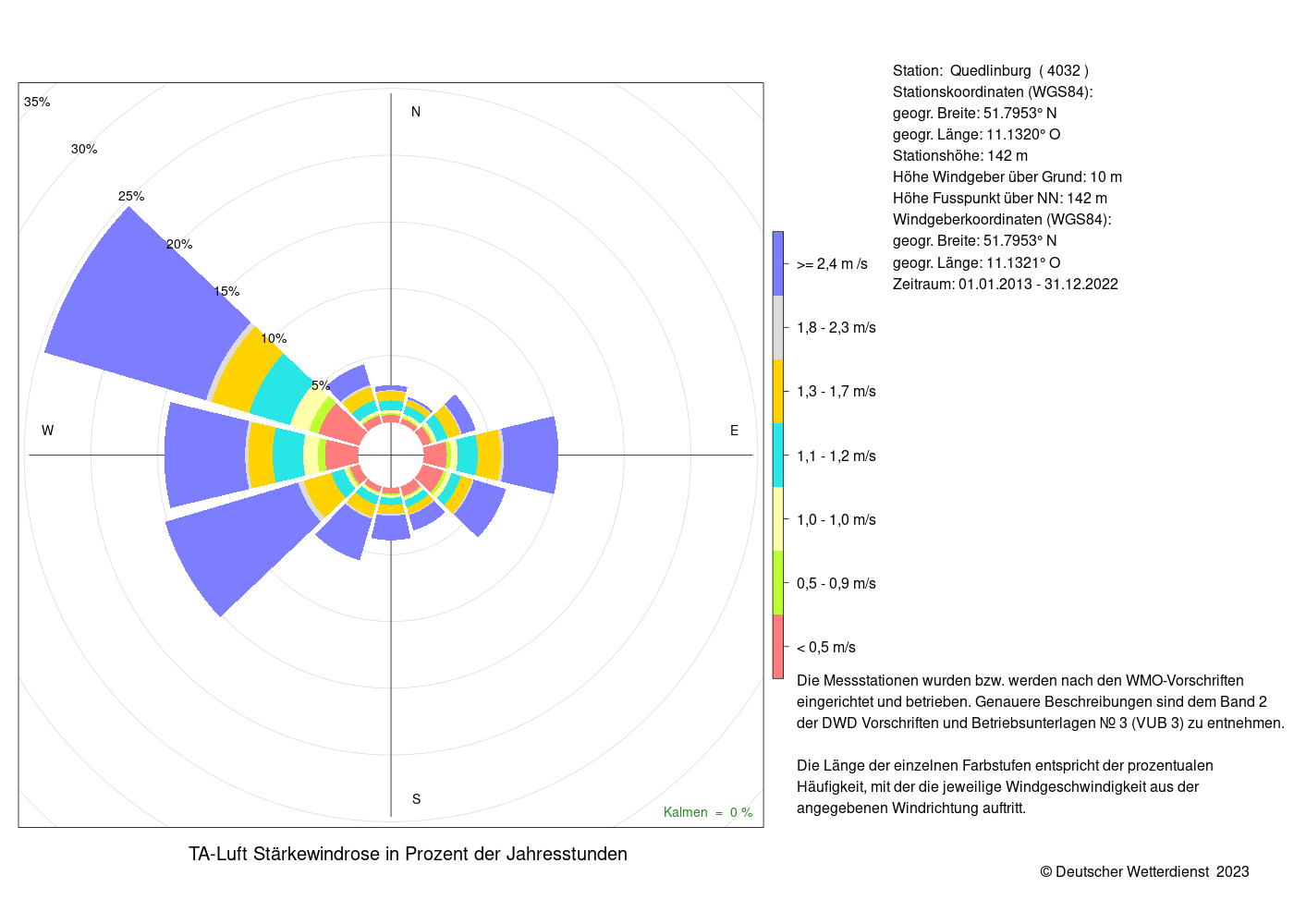
Based on hourly averages of the wind speed and wind direction, multi year strength windroses (at least 5 connected or consecutive years are used) of the relevant stations during the rolling 10 years back are created. In order to be able to make representative statements about the wind conditions at a station with the help of a starch wind rose, conditions regarding data availability, continuity of the measuring site, the homogeneity of the measuring method and uniform sensor height per site were taken into account. Quality conditions are: • at least 85 % of the data are available per month • not any relocation of the measuring site during the evaluation period • not any relocation of the sensor height during the evaluation period • the sensor height is situated within an interval of height from 7 m to 25 m over ground (including outside barriers) These data originate from stations of the DWD and legally and qualitatively equivalent partner network stations.
-
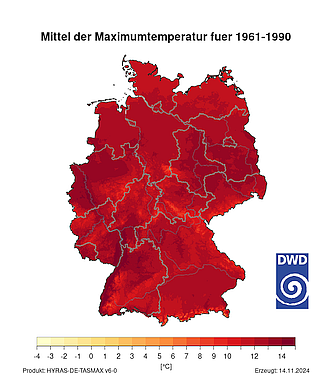
HYRAS-DE-TASMAX is a temperature product for Germany in a 1 km x 1 km grid for the period 1951 to the previous day and is based on daily measured maximum values of temperature. The data set can be used, for example, for the analysis of past climate, for bias adjustment of regionalized climate projection data and as input data for hydrological modeling.
-
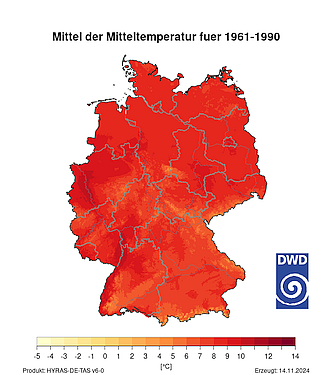
HYRAS-DE-TAS is a temperature product for Germany in a 1 km x 1 km grid for the period 1951 to the previous day and is based on daily measured temperature mean values. The data set can be used, for example, for the analysis of past climate, for bias adjustment of regionalized climate projection data and as input data for hydrological modeling.
-
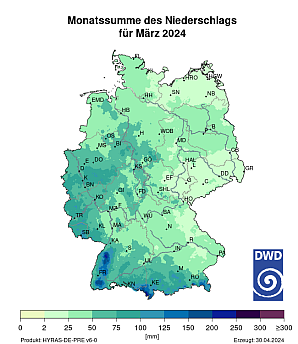
These grids are a product derived from HYRAS-DE-PR. HYRAS-DE-PR is a precipitation product for Germany in a 1 km x 1 km grid for the period 1931 to the previous day and is based on daily measured values of precipitation height. The data set can be used, for example, for the analysis of past climate, for bias adjustment of regionalized climate projection data and as input data for hydrological modeling.
-
HYRAS-DE-TASMAX is a temperature product for Germany in a 1 km x 1 km grid for the period 1951 to the previous day and is based on daily measured maximum values of temperature. The data set can be used, for example, for the analysis of past climate, for bias adjustment of regionalized climate projection data and as input data for hydrological modeling.
-
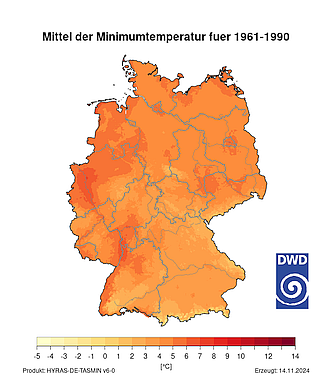
HYRAS-DE-TASMIN is a temperature product for Germany in a 1 km x 1 km grid for the period 1951 to the previous day and is based on daily measured minimum values of temperature. The data set can be used, for example, for the analysis of past climate, for bias adjustment of regionalized climate projection data and as input data for hydrological modeling.
-
HYRAS-DE-TASMIN is a temperature product for Germany in a 1 km x 1 km grid for the period 1951 to the previous day and is based on daily measured minimum values of temperature. The data set can be used, for example, for the analysis of past climate, for bias adjustment of regionalized climate projection data and as input data for hydrological modeling.
-
Based on hourly averages of the wind speed and wind direction, multi year strength windroses (at least 5 connected or consecutive years are used) of the relevant stations during the rolling 10 years back are created. In order to be able to make representative statements about the wind conditions at a station with the help of a starch wind rose, conditions regarding data availability, continuity of the measuring site, the homogeneity of the measuring method and uniform sensor height per site were taken into account. Quality conditions are: • at least 85 % of the data are available per month • not any relocation of the measuring site during the evaluation period • not any relocation of the sensor height during the evaluation period • the sensor height is situated within an interval of height from 7 m to 25 m over ground (including outside barriers) These data originate from stations of the DWD and legally and qualitatively equivalent partner network stations.