 My GeoNetwork catalogue
at ca. 10 m above surface
Provided by
Type of resources
Available actions
Topics
Keywords
Update frequencies
-
These data come from DWD stations and legally and qualitatively equivalent partner stations operated for climatological and climate related applications. Extensive station metadata (station relocations, instrument changes, change of reference time, changes in algorithms) are provided with the download via the CDC portal. The measurements are assigned to a timestamp in UTC which marks the end of the 10-minute interval. The average wind speed is calculated from the 3-second values within a 10-minute interval.
-

Based on hourly averages of the wind, multi-year strength wind roses (at least strength wind roses with an annual reference) are created. In order to be able to make representative statements about the wind conditions at a station with the help of a starch wind rose, conditions regarding data availability, continuity of the measuring site, homogeneity of the measuring method and a uniform sensor height per site were taken into account. These data originate from stations of the DWD and legally and qualitatively equivalent partner network stations.
-
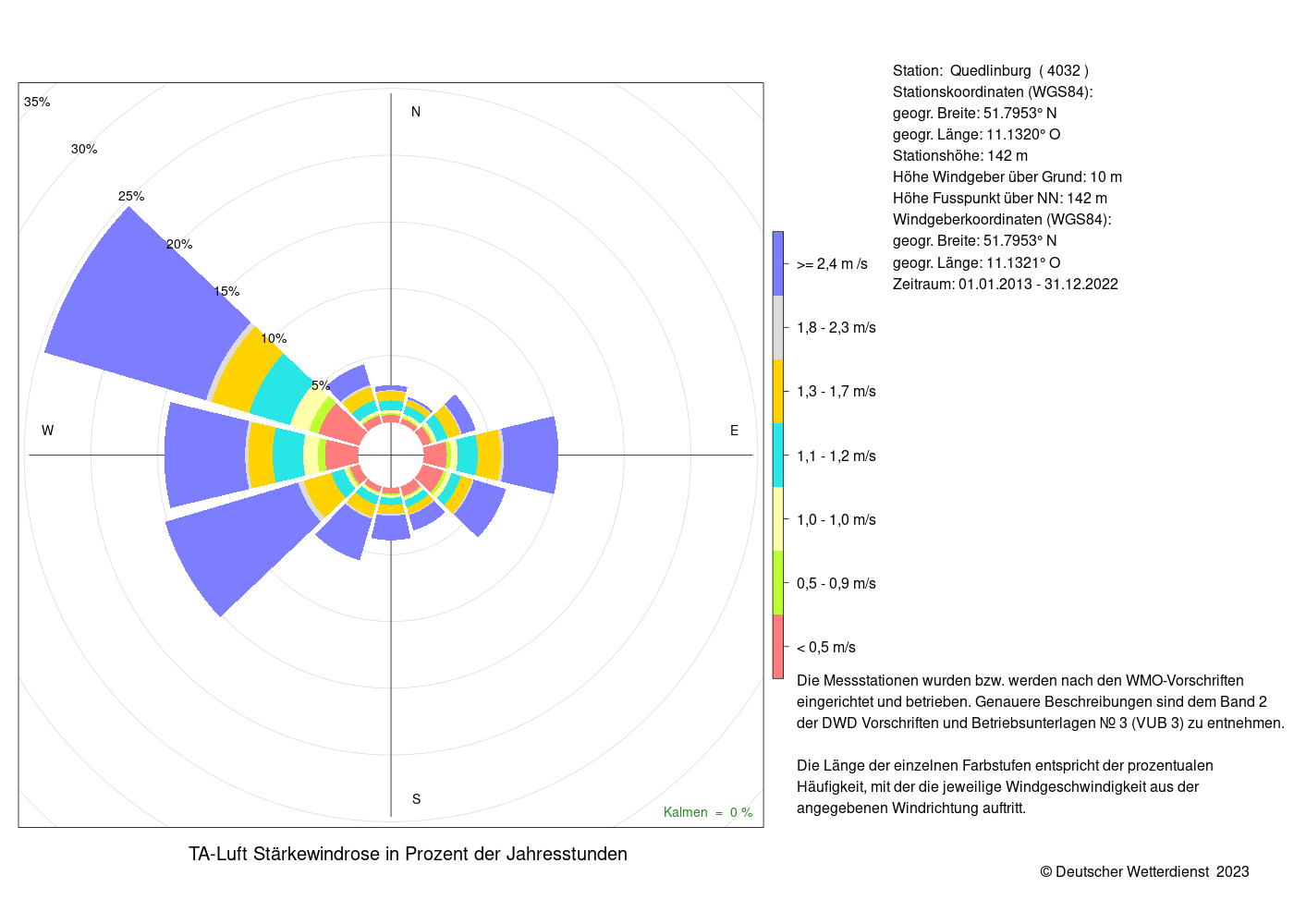
Based on hourly averages of the wind speed and wind direction, multi year strength windroses (at least 5 connected or consecutive years are used) of the relevant stations during the rolling 10 years back are created. In order to be able to make representative statements about the wind conditions at a station with the help of a starch wind rose, conditions regarding data availability, continuity of the measuring site, the homogeneity of the measuring method and uniform sensor height per site were taken into account. Quality conditions are: • at least 85 % of the data are available per month • not any relocation of the measuring site during the evaluation period • not any relocation of the sensor height during the evaluation period • the sensor height is situated within an interval of height from 7 m to 25 m over ground (including outside barriers) These data originate from stations of the DWD and legally and qualitatively equivalent partner network stations.
-
Based on hourly averages of the wind speed and wind direction, multi year strength windroses (at least 5 connected or consecutive years are used) of the relevant stations during the rolling 10 years back are created. In order to be able to make representative statements about the wind conditions at a station with the help of a starch wind rose, conditions regarding data availability, continuity of the measuring site, the homogeneity of the measuring method and uniform sensor height per site were taken into account. Quality conditions are: • at least 85 % of the data are available per month • not any relocation of the measuring site during the evaluation period • not any relocation of the sensor height during the evaluation period • the sensor height is situated within an interval of height from 7 m to 25 m over ground (including outside barriers) These data originate from stations of the DWD and legally and qualitatively equivalent partner network stations.
-
The wind gust is the highest 3-second value within a 10-minute interval. The measurements are assigned to a timestamp in UTC which marks the end of the 10-minute interval. These data originate from the stations of the DWD and qualitatively as well as legally equivalent partner networks. Station metadata (station relocations, instrument changes, change of reference time, changes in the algorithms) are supplied when downloading via the CDC portal.
-
These data come from DWD stations and legally and qualitatively equivalent partner stations operated for climatological and climate related applications. Extensive station metadata (station relocations, instrument changes, change of reference time, changes in algorithms) are provided with the download via the CDC portal. The measurements are assigned to a timestamp in UTC which marks the end of the 10-minute interval. The 10-minutes interval is moved in 10 second steps over the last 20 minutes.
-

These data come from DWD stations and legally and qualitatively equivalent partner stations operated for climatological and climate related applications. Extensive station metadata (station relocations, instrument changes, change of reference time, changes in algorithms) are provided with the download via the CDC portal. The measurements are assigned to a timestamp in UTC which marks the end of the 10-minute interval. The output is the wind direction of the wind gust within a 10-minute interval.
-
10-minute station observations of mean wind direction at ca. 10 m above ground in degree for Germany
These data come from DWD stations and legally and qualitatively equivalent partner stations operated for climatological and climate related applications. Extensive station metadata (station relocations, instrument changes, change of reference time, changes in algorithms) are provided with the download via the CDC portal. The measurements are assigned to a timestamp in UTC which marks the end of the 10-minute interval. The average wind direction is calculated from the 3-second values within a 10-minute interval.
-
These data come from DWD stations and legally and qualitatively equivalent partner stations operated for climatological and climate related applications. Extensive station metadata (station relocations, instrument changes, change of reference time, changes in algorithms) are provided with the download via the CDC portal. The measurements are assigned to a timestamp in UTC which marks the end of the 10-minute interval. The 10-minutes interval is moved in 10 second steps over the last 20 minutes.