 My GeoNetwork catalogue
station data
Provided by
Type of resources
Available actions
Topics
Keywords
Update frequencies
-
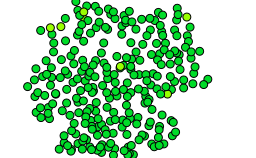
These data come from DWD stations and legally and qualitatively equivalent partner stations operated for climatological and climate related applications. Extensive station metadata (station relocations, instrument changes, change of reference time, changes in algorithms) are provided with the download via the CDC portal. The measurements are assigned to a timestamp in UTC which marks the end of the 10-minute interval. The 10-minutes interval is moved in 10 second steps over the last 20 minutes.
-
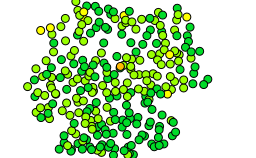
The wind gust is the highest 3-second value within a 10-minute interval. The measurements are assigned to a timestamp in UTC which marks the end of the 10-minute interval. These data originate from the stations of the DWD and qualitatively as well as legally equivalent partner networks. Station metadata (station relocations, instrument changes, change of reference time, changes in the algorithms) are supplied when downloading via the CDC portal.
-
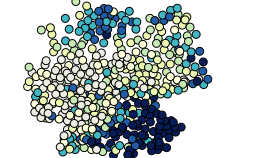
These data come from DWD stations and legally and qualitatively equivalent partner stations operated for climatological and climate related applications. Extensive station metadata (station relocations, instrument changes, change of reference time, changes in algorithms) are provided with the download via the CDC portal. The measurements are assigned to a timestamp in UTC which marks the end of the 10-minute interval. The values are average values over the minute, which ends at the time stamp.
-
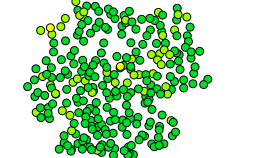
These data come from DWD stations and legally and qualitatively equivalent partner stations operated for climatological and climate related applications. Extensive station metadata (station relocations, instrument changes, change of reference time, changes in algorithms) are provided with the download via the CDC portal. The measurements are assigned to a timestamp in UTC which marks the end of the 10-minute interval. The 10-minutes interval is moved in 10 second steps over the last 20 minutes.
-

These data come from DWD stations and legally and qualitatively equivalent partner stations operated for climatological and climate related applications. Extensive station metadata (station relocations, instrument changes, change of reference time, changes in algorithms) are provided with the download via the CDC portal. The measurements are assigned to a timestamp in UTC which marks the end of the 10-minute interval. The output is the wind direction of the wind gust within a 10-minute interval.
-
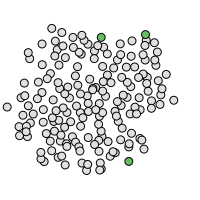
These data come from DWD stations and legally and qualitatively equivalent partner stations operated for climatological and climate related applications. Extensive station metadata (station relocations, instrument changes, change of reference time, changes in algorithms) are provided with the download via the CDC portal. The measurements are assigned to a timestamp in UTC which marks the end of the 10-minute interval. As of 1.1.2000 the time stamp is given in UTC, for the period before that in CET.
-
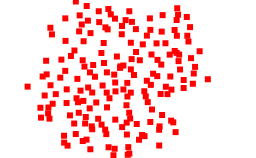
These data come from DWD stations and legally and qualitatively equivalent partner stations operated for climatological and climate related applications. Extensive station metadata (station relocations, instrument changes, change of reference time, changes in algorithms) are provided with the download via the CDC portal. The measurements are assigned to a timestamp in UTC which marks the end of the 10-minute interval. As of 1.1.2000 the time stamp is given in UTC, for the period before that in CET.
-
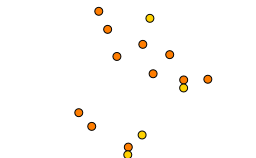
These data come from DWD stations and legally and qualitatively equivalent partner stations operated for climatological and climate related applications. Extensive station metadata (station relocations, instrument changes, change of reference time, changes in algorithms) are provided with the download via the CDC portal. The measurements are assigned to a timestamp in UTC which marks the end of the 10-minute interval. The solar incoming radiation includes the direct and the diffuse part of the solar radiation with respect to the horizontal plane. It is sometimes also referred to as "shortwave", including the solar spectrum up to 2.8 micron, as opposed to "longwave", which refers to the thermal radiation of the atmosphere.
-
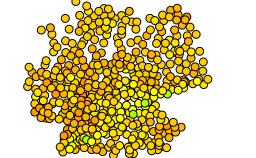
These data come from DWD stations and legally and qualitatively equivalent partner stations operated for climatological and climate related applications. Extensive station metadata (station relocations, instrument changes, change of reference time, changes in algorithms) are provided with the download via the CDC portal. The measurements are assigned to a timestamp in UTC which marks the end of the 10-minute interval. The values are average values over the minute, which ends at the time stamp.
-
These data come from DWD stations and legally and qualitatively equivalent partner stations operated for climatological and climate related applications. Extensive station metadata (station relocations, instrument changes, change of reference time, changes in algorithms) are provided with the download via the CDC portal. The measurements are assigned to a timestamp in UTC which marks the end of the 10-minute interval. As of 1.1.2000 the time stamp is given in UTC, for the period before that in CET.